Begin with condition, not drama
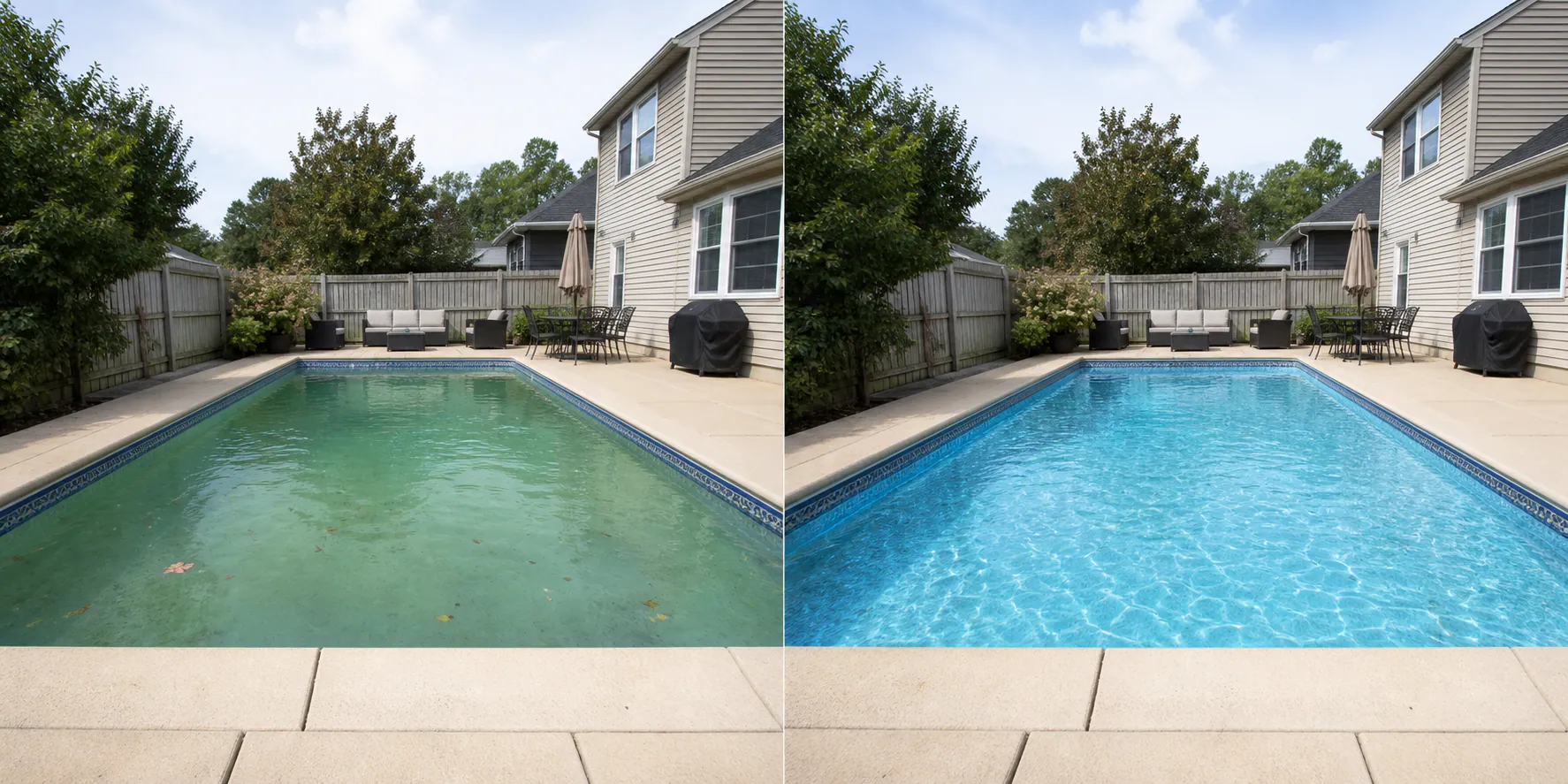
A useful record opens with what was visible when the technician arrived. Clear water, floating debris, a changed sound or an access issue can be described without inflating the observation into a diagnosis. A photo may add context, but it should support the note rather than replace it.
Match completed work to the routine scope
The owner should be able to see which agreed tasks were completed. That boundary matters because recurring service should not quietly absorb unrelated work. If the condition requires a different assessment, the report can say so plainly.
Treat readings as a record of that visit
Numbers shown in this demo are fictional samples. In a real workflow, recorded readings belong to the serviced pool and the trained operator’s process; they are not a universal chemical prescription for someone reading the public website.
End with a decision state
A new issue should be marked as noted, awaiting owner details, ready for inspection or presented for approval. That final status removes the uncertainty that usually creates follow-up calls.